

Nel panorama delle memorie di guerra pubblicate in Italia, “Batteria, fuoco! – Ricordi di un ufficiale del 71° Werfer-Regiment durante la campagna d’Italia 1943-1945” di Johann Golda rappresenta un caso editoriale decisamente interessante trattandosi sia di un diario privo di elementi romanzati sia di una testimonianza riguardante un comune ufficiale tedesco. Il valore storiografico è limitato ma è degna di nota la prospettiva offerta: quella di un tenente della Wehrmacht, inquadrato nel 71° Werfer-Regiment, durante la Campagna d’Italia.
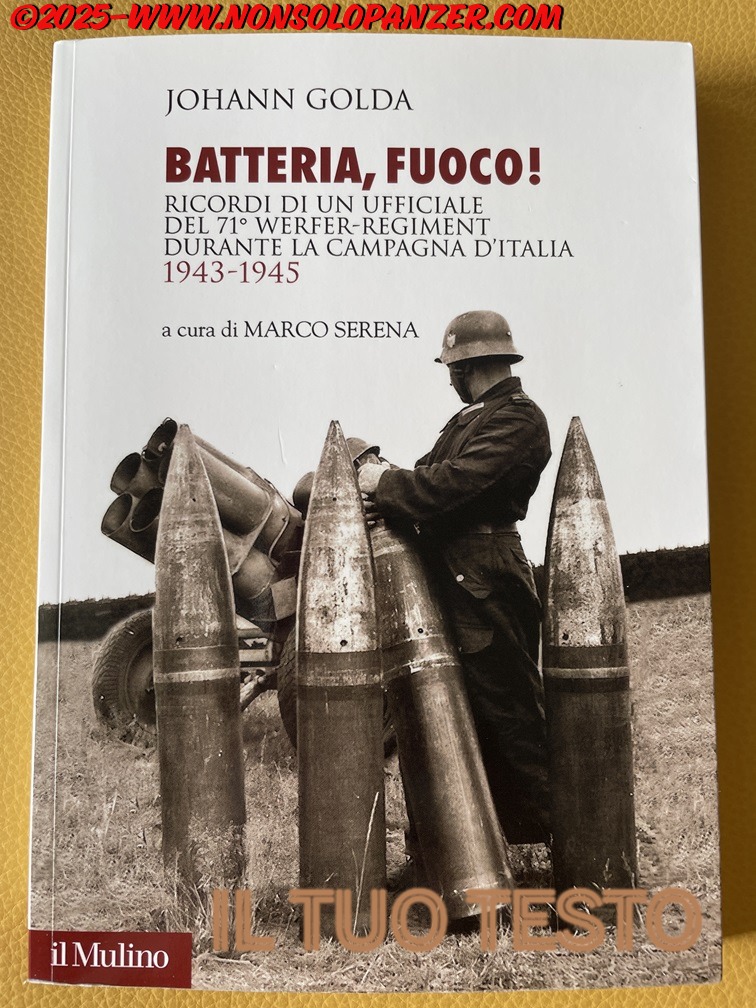
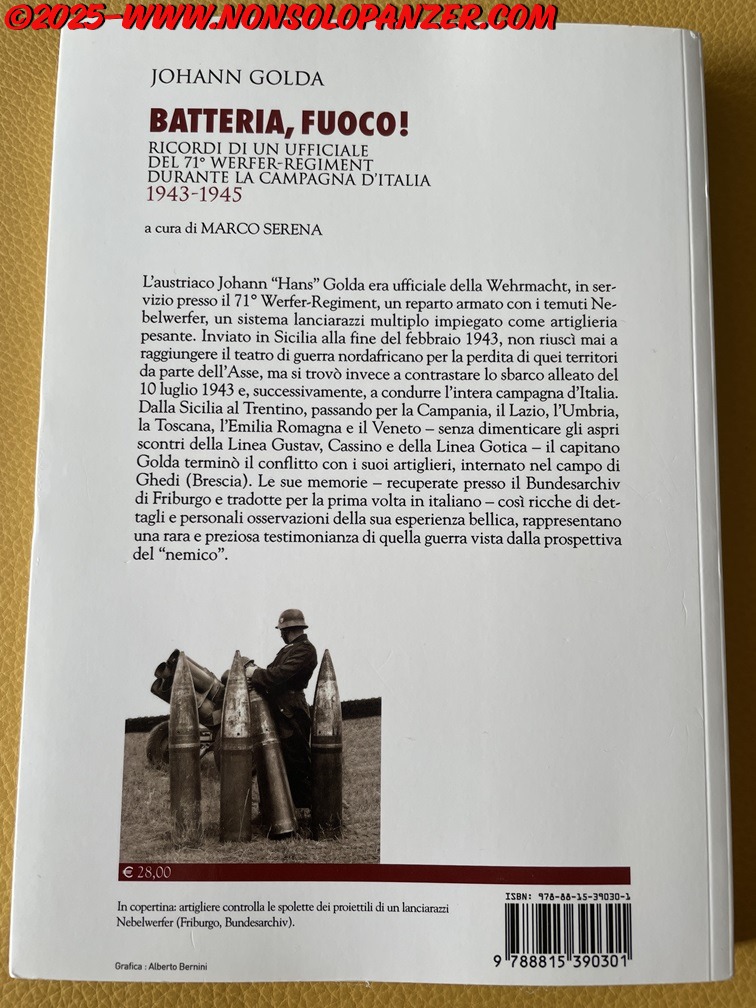
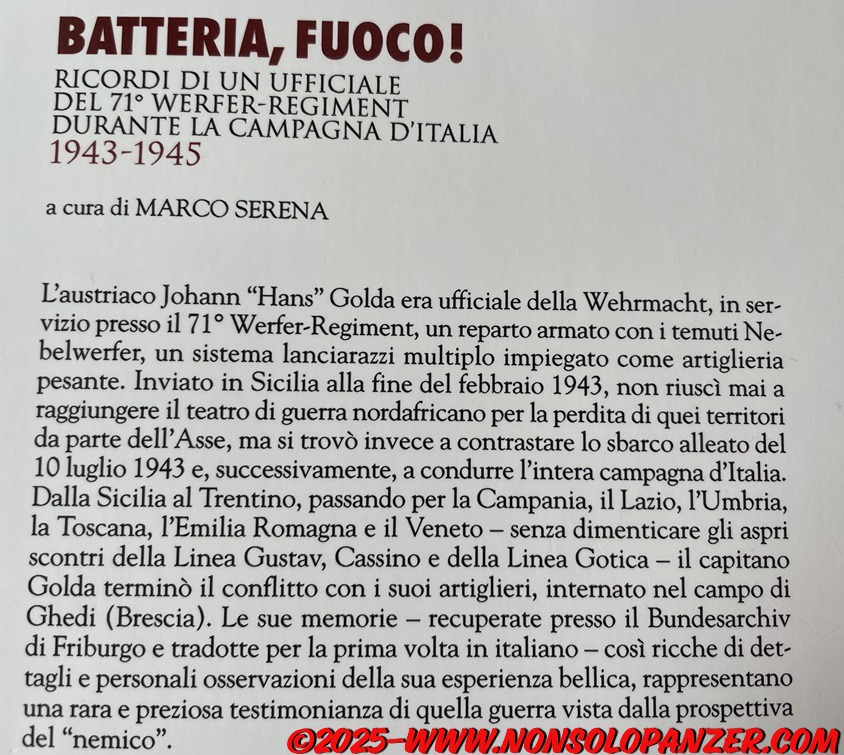
Johann “Hans” Golda era un ufficiale austriaco, veterano di Polonia, Francia e fronte orientale, trasferito in Italia nel febbraio 1943. Avrebbe dovuto raggiungere il Nordafrica, ma la disfatta dell’Asse in Tunisia lo portò in Sicilia, dove prese parte ai combattimenti contro lo sbarco alleato del 10 luglio 1943. Da lì, partecipò all’intera Campagna d’Italia fino alla resa a Ghedi (BS) nel 1945. Golda era al comando del 6° Abteilung del 71° Werfer-Regiment, unità armata con i lanciarazzi multipli Nebelwerfer. Il reggimento, parte della 5ª Werfer-Brigade, fu intensamente impiegato in Italia in ruoli di supporto d’artiglieria grazie alla dotazione di 15 cm Nebelwerfer 41 e di 21 cm Nebelwerfer 42. Sviluppati come nebbiogeni per aggirare i vincoli del Trattato di Versailles, i Nebelwerfer entrarono in servizio con un’ampia gamma di munizioni esplosive ed incendiarie. Incredibilmente distruttivi, i Nebelwerfer erano tanto efficaci quanto pericolosi da gestire e necessitavano di personale ben addestrato e di tattiche d’impiego specifiche.
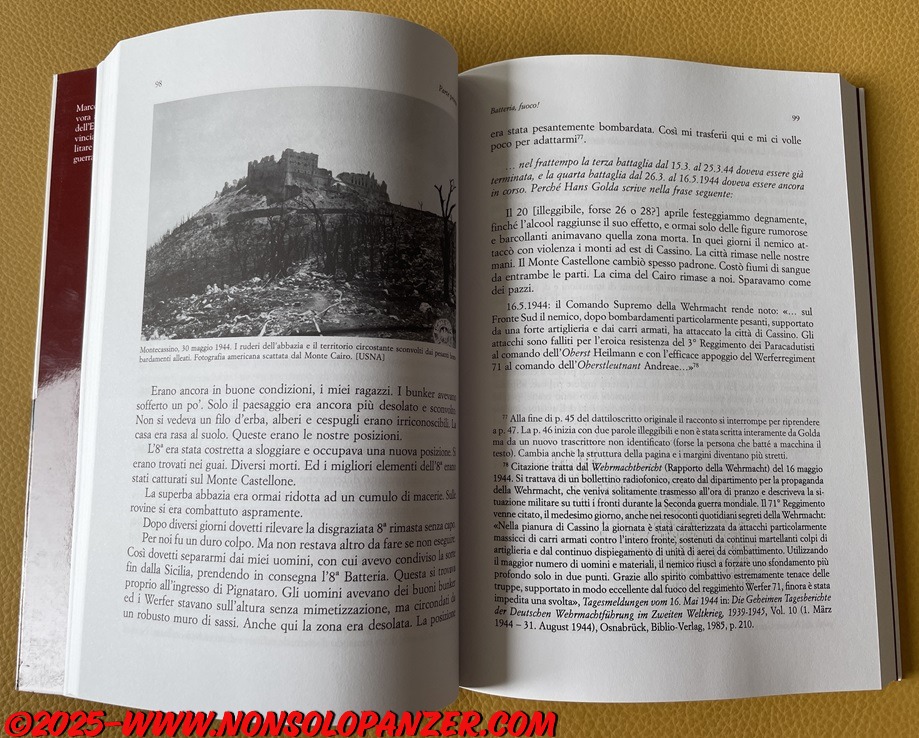
Ciò premesso, ho il dovere di smorzare gli entusiasmi che “Batteria, fuoco! – Ricordi di un ufficiale del 71° Werfer-Regiment durante la campagna d’Italia 1943-1945” potrebbe suscitare in un appassionato di storia militare della Seconda Guerra Mondiale. Il libro non è un saggio sulle modalità d’impiego e le caratteristiche tecniche dei Nebelwerfer, tantomeno una descrizione delle particolarità del fronte italiano e delle strategie applicate dall’esercito tedesco in tale teatro operativo. Si tratta di un diario personale, con i pregi ed i difetti che ciò comporta.
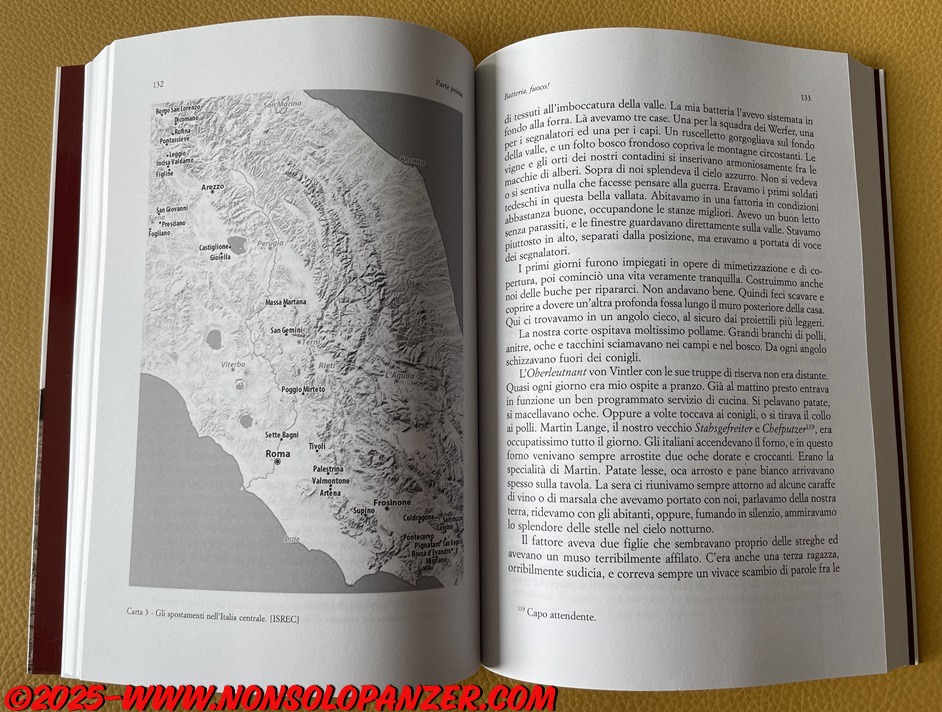
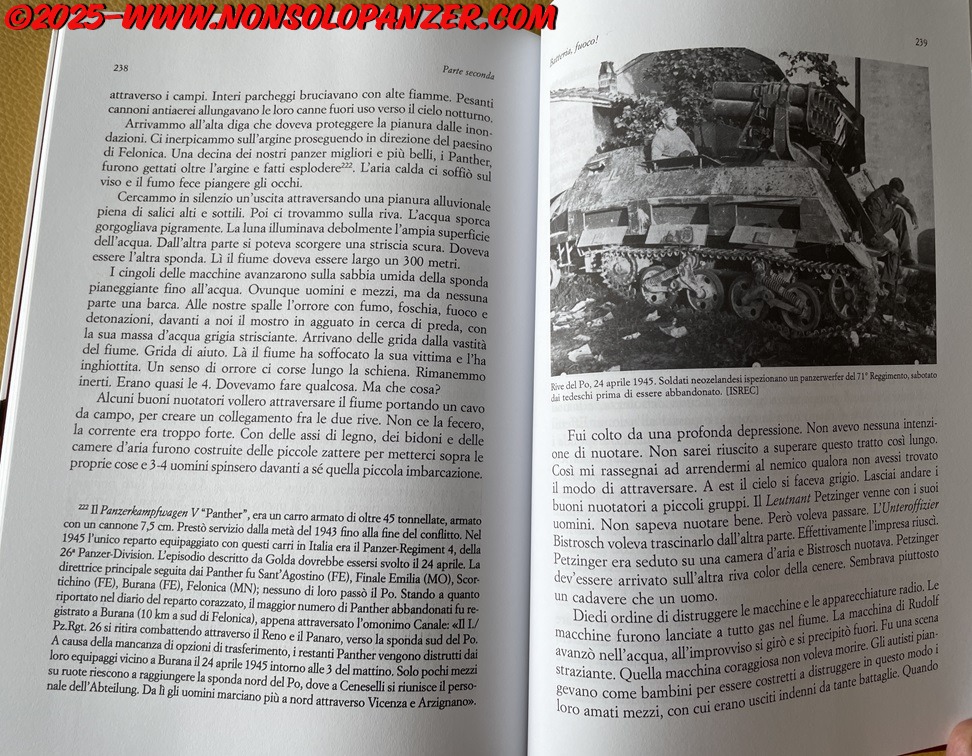
Fra i vantaggi di questo tipo di testo vi è certamente l’autenticità di una testimonianza diretta, vivida e personale delle esperienze maturate dal protagonista. Il lettore entra nella quotidianità di un ufficiale tedesco al fronte, percepisce il forte affiatamento tra i soldati, la tragedia per i compagni morti e feriti, il senso del dovere di Golda, che cerca sempre di proteggere i suoi uomini. L’aspetto più negativo è che tutto si svolge in un contesto molto piccolo, condizionato da una quotidianità ripetitiva e da una visione dei fatti e del contesto militare estremamente ridotto. Le attività prettamente militari della batteria sono accennate in modo sporadico e molto vago, confermando indirettamente come le singole unità eseguissero gli ordini senza sapere contro chi sparavano e con quali effetti sul bersaglio o sull’andamento di una battaglia. Il libro, val la pena ricordarlo, è del resto un diario personale e non l’insieme dei rapporti e dello stato di servizio del 71° Werfer-Regiment. Le conseguenze di tutto ciò determinano, a mio parere, il difetto principale del libro che, in concreto, si riduce al ripetitivo racconto di quanto più impatta, in positivo ed in negativo, sulla quotidianità di Golda: gli spostamenti da una postazione di tiro ad un’altra con i rischi che comporta, l’allestimento di postazioni protette per uomini e mezzi, la disponibilità di cibo e alcool, l’organizzazione di feste e goliardate fra soldati ed ufficiali. Ne deriva un testo monotono, sempre a rischio di risultare noioso anche ad un incallito appassionato di storia militare. Solo nelle fasi finali della guerra, in particolare nell’attraversamento del Panaro e del Po, si colgono dei guizzi narrativi (davvero toccante è il momento in cui l’unità è costretta a distruggere veicoli e Nebelwerfer sulla sponda meridionale del Po – Golda è profondamente scioccato dalla portata del disastro tedesco sul grande fiume e non manca di testimoniare con rabbia e scoramento la triste distruzione degli ultimi 10 carri “Panther” del Panzer-Regiment 26).
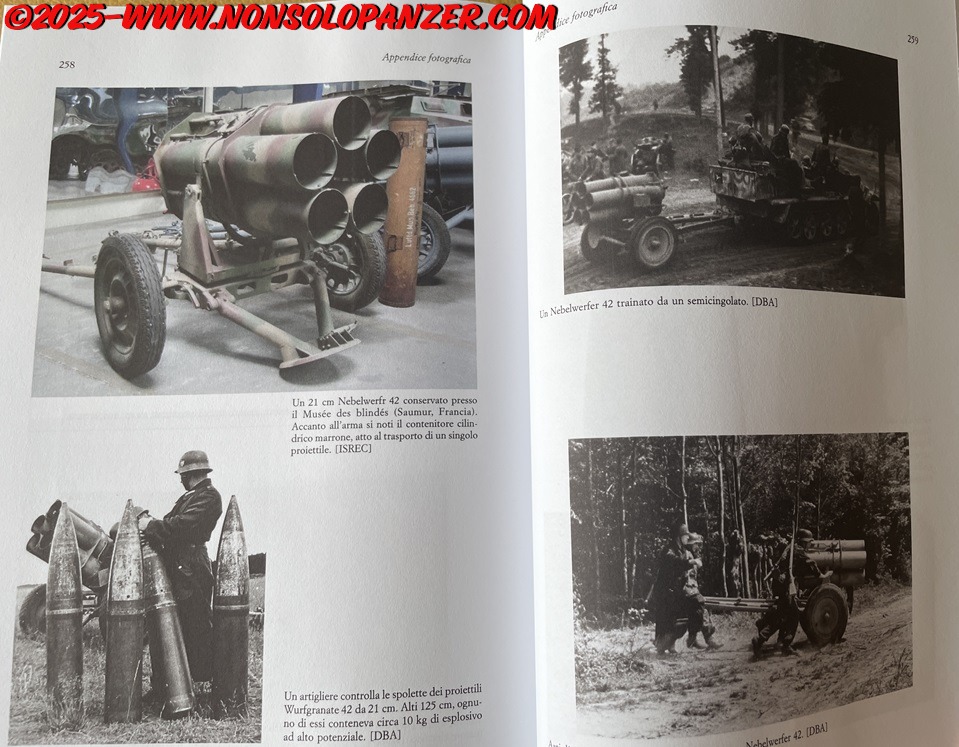
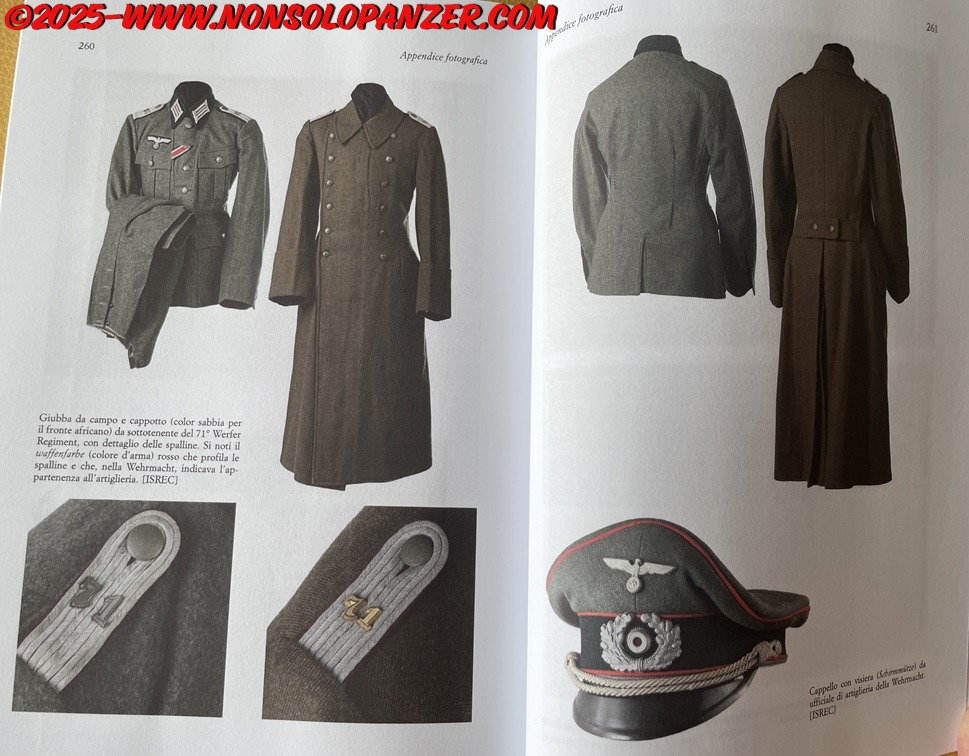
“Batteria, fuoco! – Ricordi di un ufficiale del 71° Werfer-Regiment durante la campagna d’Italia 1943-1945” è dunque una lettura poco interessante? Assolutamente no! Per quanto mi riguarda, il libro mi ha fatto comprendere come i Nebelwerfer fossero armi temute da tutti: dagli avversari per l’effetto devastante dei loro razzi e dalle stesse unità tedesche che, dislocare in prossimità del Werfer-Regiment, subivano anch’esse il devastante fuoco di controbatteria nemico. Tutto veniva in breve raso al suolo intorno ai Nebelwerfer eppure, a differenza di quanto immaginavo, distruggere questo tipo di armamenti non era facile. Benché il fumo dei razzi fosse visibile al lancio da grande distanza, era comunque difficile individuarli con precisione e quasi impossibile distruggere con l’artiglieria postazioni ben collocate, protette e camuffate.
Concludendo, “Batteria, fuoco! – Ricordi di un ufficiale del 71° Werfer-Regiment durante la campagna d’Italia 1943-1945” è un libro meritevole di attenzione a patto di non aspettarsi mappe, ordini di battaglia o analisi tattiche bensì una voce diretta, sincera e umana da “dietro le quinte” della guerra.
English Language
In the panorama of war memoirs published in Italy, “Battery, fire! – Memories of an officer of the 71st Werfer-Regiment during the Italian campaign 1943-1945” (Batteria, fuoco! – Ricordi di un ufficiale del 71° Werfer-Regiment durante la campagna d’Italia 1943-1945) by Johann Golda represents an interesting case since it is a testimony devoid of any novelistic adaptation and involving an ordinary German officer. The historiographical value is limited but the perspective offered is noteworthy: that of a lieutenant of the Wehrmacht of the 71st Werfer-Regiment, during the Italian Campaign.
Johann “Hans” Golda was an Austrian officer, veteran of Poland, France and the Eastern Front, transferred to Italy in February 1943. He was supposed to reach North Africa, but the defeat of the Axis in Tunisia took him to Sicily, where he took part in the fighting against the Allied landing on 10 July 1943. From there, he participated in the entire Italian Campaign until the surrender at Ghedi (BS) in 1945. Golda was in command of the 6th Abteilung of the 71st Werfer-Regiment, a unit armed with Nebelwerfer multiple rocket launchers. The regiment, part of the 5th Werfer-Brigade, was intensively employed in Italy with artillery support roles thanks to the equipment of 15 cm Nebelwerfer 41 and 21 cm Nebelwerfer 42. Developed as fog launchers to circumvent the constraints of the Treaty of Versailles, the Nebelwerfer entered service with a wide range of explosive and incendiary munitions. Incredibly destructive, the Nebelwerfer were as effective as they were dangerous to manage and required well-trained personnel and specific tactics.
That said, I have the duty to dampen the enthusiasm that “Battery, fire! – Memories of an officer of the 71st Werfer-Regiment during the Italian campaign 1943-1945” could arouse in a fan of military history of the Second World War. The book is not an essay on the methods of use and technical characteristics of the Nebelwerfer, nor is it a description of the peculiarities of the Italian front and the strategies applied by the German army in this theater of operations. It is a personal diary, with the strengths and weaknesses that this entails.
Among the advantages of this type of text there is certainly the authenticity of a direct, vivid and personal testimony of the experiences gained by the protagonist. The reader enters the daily life of a German officer at the front, perceives the strong friendship between the soldiers, the tragedy for the dead and wounded comrades, the sense of duty of Golda, who always tries to protect her men. The most negative aspect is that everything takes place in a very small context, conditioned by a repetitive everyday life and an extremely reduced view of the facts and the military context. The military activities of the battery are mentioned sporadically and very vaguely, indirectly confirming how the units carried out orders without knowing who they were shooting at and with what effects on the target or on the course of a battle. The book, it is worth remembering, is after all a personal diary and not the set of reports and the state of service of the 71st Werfer-Regiment. The consequences of all this determine, in my opinion, the main flaw of the book which, in practice, is reduced to the repetitive story of what most impacts, positively and negatively, on Golda’s daily life: the movements from one shooting position to another with the risks that entail, the setting up of protected positions for men and vehicles, the availability of food and alcohol, the organization of parties and jokes between soldiers and officers. The result is a monotonous text, always at the risk of being boring even to an inveterate military history enthusiast. Only in the final stages of the war, in particular in the crossing of the Panaro and the Po rivers, are there narrative flashes (the moment in which the unit is forced to destroy vehicles and Nebelwerfers is really touching – Golda is also deeply shocked by the extent of the German disaster on the great river and does not fail to witness with anger and discouragement the sad destruction of the last 10 “Panther” tanks of the Panzer-Regiment 26).
“Battery, fire! – Memories of an officer of the 71st Werfer-Regiment during the Italian campaign 1943-1945” is therefore an uninteresting reading? Absolutely not! As far as I am concerned, the book made me understand that the Nebelwerfer were weapons feared by everyone: by the adversaries for the devastating effect of their rockets and by the German units themselves which, deployed near the Werfer-Regiment, were also subjected to the devastating enemy counter-battery fire. Everything was quickly razed to the ground around the Nebelwerfer and yet, unlike what I imagined, destroying this type of armament was not easy. Although the smoke from the rockets was visible at launch from a great distance, it was still difficult to detect them accurately and almost impossible to destroy well-placed, protected and camouflaged positions with artillery.
Concluding, “Battery, fire! – Memories of an officer of the 71st Werfer-Regiment during the Italian campaign 1943-1945” is a book worthy of attention as long as you do not expect maps, orders of battle or tactical analysis but a direct, sincere and human voice from “behind the scenes” of the war.
 NonSoloPanzer